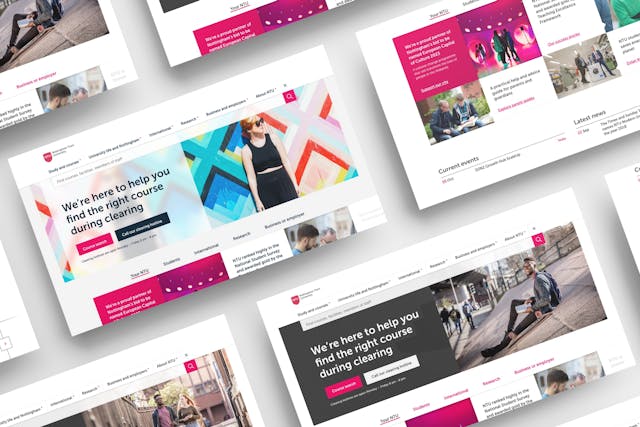
Digital strategy and design system delivery for Nottingham Trent University.
A user-centred realignment of the University of the Year’s website


“We are driven by our determination to become the University of the future. By addressing the themes within our current University strategy, University, reimagined, we are tackling social injustice, valuing ideas and creating opportunities.”
Research and discovery
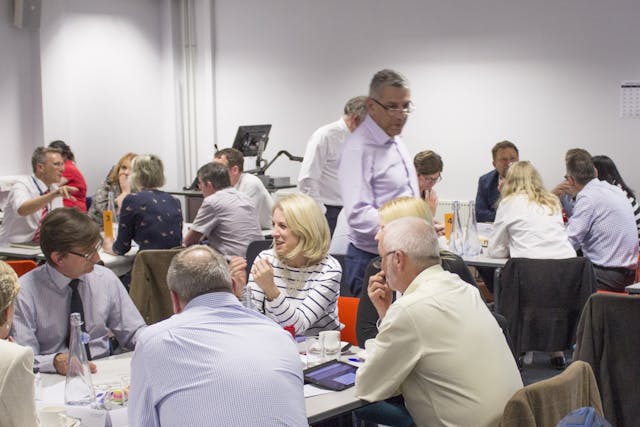
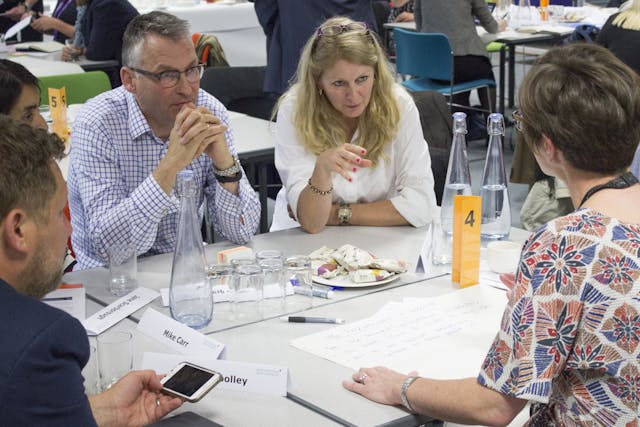
We ran workshops with NTU’s executive, marketing and senior leadership teams, reviewed existing user research and identified the gaps that needed filling. Through staff surveys, audience surveys, stakeholder interviews and user interviews, we mapped out more than 80 user groups and hundreds of user stories. The scale of that research gave us a clear picture of what the website needed to do, and for whom.
Information architecture
The existing structure was heavily weighted toward student recruitment, leaving research, business services and other significant areas of NTU’s work underserved. We used the user needs research to build an information architecture candidate organised around audiences and their goals, then tested it on real users using Treejack before any design work began. The result was a structure grounded in evidence, not assumption.
Feature recommendations
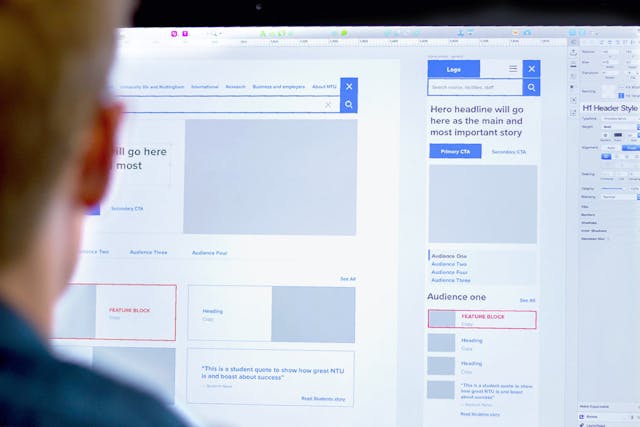
Restructuring alone wouldn’t solve everything. We identified a set of additional features to improve the experience of frequent tasks and give the site clearer ways to tell the university’s broader story. Once approved by the University Executive Team, we worked closely with NTU’s internal digital team to draft wireframes, prototype the new features and produce visual layouts for the revised navigation and key pages.
“From initiation right through to production the Kind team were always open, friendly and helpful. They coached us to make the right decisions but accepted our constraints, quickly finding an alternative solution. Kind revitalised our stakeholders, the website and our team.”
Internal engagement
NTU’s previous web project had been run largely behind closed doors, which created frustration across the wider university when it launched. We ran this project openly, with regular stakeholder involvement and progress updates published through an internal blog, so the people affected by the changes could follow along and feed in throughout.