Strategy, design, build and integrations
A digital experience that understands your situation
By Mat Hayward, Founder and Partnerships Director

In September 2026, Papyrus entered administration and closed. We’re deeply saddened by the news. For almost 30 years, Papyrus worked to prevent young suicide in the UK, and its closure is a huge loss for the young people and families it supported.
We’re proud of what we created alongside the Papyrus team, and we’ve kept this case study here as a record of that work.
The Papyrus website needed to serve many different groups and different needs, but most importantly, young people who may be in active crisis.
So, delivering a successful website wasn’t about clever features or a great design (although I think we did that too), Instead, it was about clarity, calmness in the right areas and making sure that the right information was quick and easy to find, without friction, confusion, or adding to the distress they might already be feeling.
Starting with the audience
The strategic foundation that preceded the build gave us a detailed understanding of each of the distinct groups Papyrus needs to reach. Firstly, young people in crisis, but also parents, friends and carers who are worried about someone. Professionals who work with young people and need resources, training and guidance, and supporters who want to understand Papyrus’ work and how they can contribute.
All of these groups had different needs, starting points, mental states and relationships with the Papyrus and their subject matter. A professional arriving on the site to book a training session should have a very different journey than a young person arriving because they’re struggling. It was important that the architecture of the site could hold all of that without feeling complicated or cluttered.
We mapped user journeys for each audience, working through how different groups would need to navigate and use the site, depending on the task they were trying to complete or the information they needed to gather. That process gave us something real to test our thinking against and meant that, when we moved into design and build, the decisions we made were grounded in what users actually needed.
Designing for vulnerability
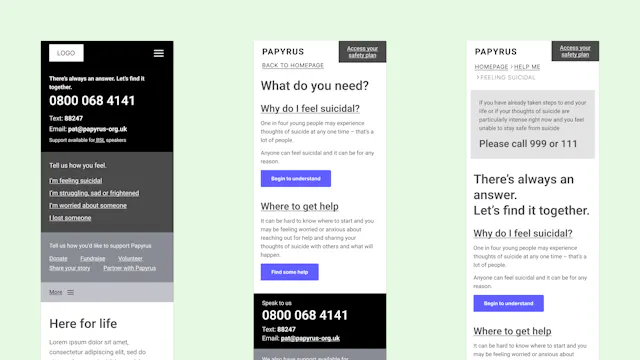
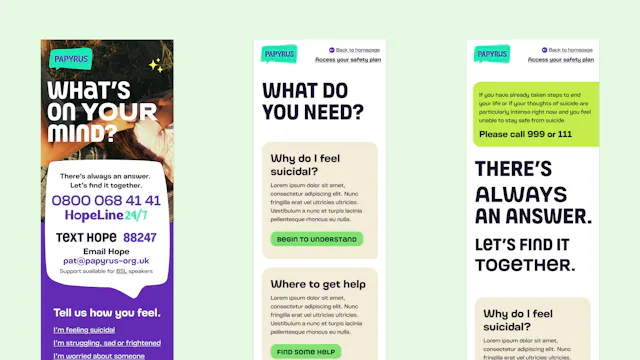
The audience that required the most careful thought was the one Papyrus exists to serve: young people in crisis. When a young person arrives at the site at their most difficult moment, they are not browsing. They are looking for hope, a reason to stay, a way to reach out, or a sign that help is available and that someone will answer.
Every design decision for that user journey was made with that context in mind. On the homepage, crisis content takes over the full experience, surfacing immediately for anyone who needs it, with users who are there for other reasons simply scrolling past to find what they’re looking for. Crisis pages themselves, were stripped back significantly to avoid adding to the stress a user might already be under. For everyone else, those visiting to donate, volunteer, or get involved, the site functions much like any other, warm, engaging, and consistent with the new brand.
A flexible design system
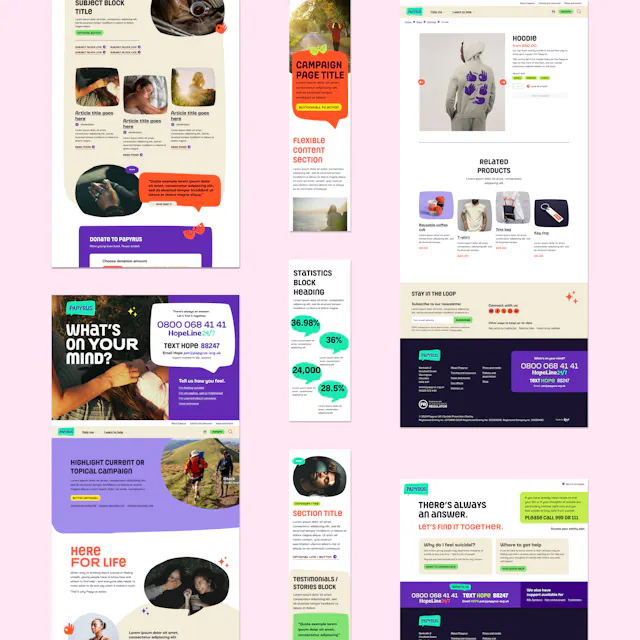
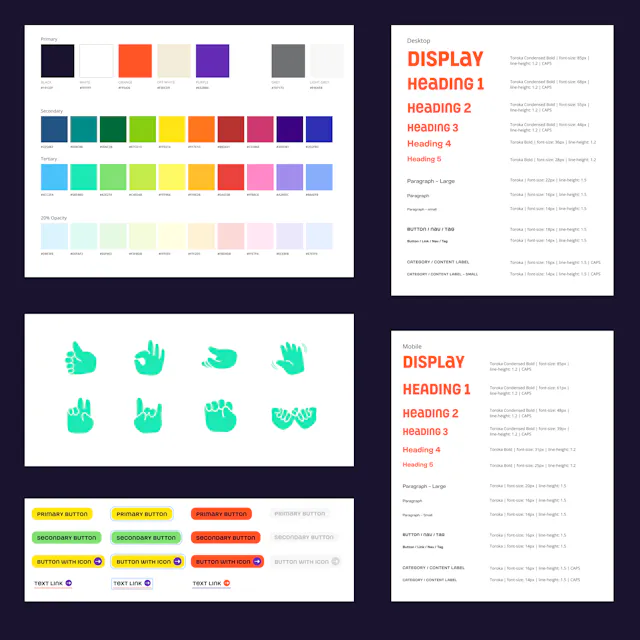
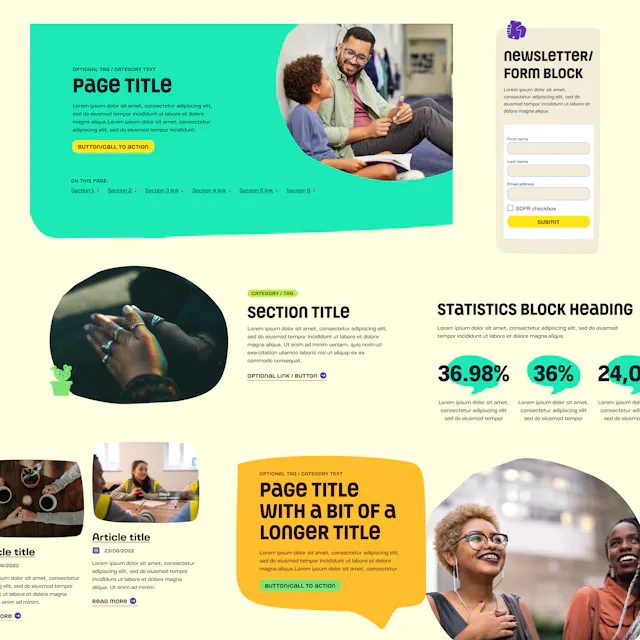
One of the things I care about most on any website project is what happens after we launch. A site that depends on the agency for every update is less of a useful long-term tool and more of an ongoing liability. The Papyrus website was built with a flexible, component-based design system that gives their in-house team the confidence to publish content without breaking the brand or the user experience.
The system was structured around clearly defined components, each one designed, documented and tested so the team can build new pages and update existing ones in a way that stays on-brand and will give the website longevity.
Integrations that do real work
The website connected directly to Raiser’s Edge NXT, Papyrus’s CRM. Form submissions, fundraising event registrations and shop purchases all pass data automatically, giving the team a real, up-to-date view of their supporters and partners without any manual exporting or importing.
We also integrated Mailchimp, so any form on the site can include a subscription opt-in, and built a Stripe-integrated shop giving Papyrus a direct route to generate income through merchandise and supporters a simple way to contribute to their mission.
“The Papyrus website was to be used by people experiencing the hardest moments of their lives. Whether that’s young people in crisis, parents who do not know where to turn or people experiencing grief they never prepared for. That shaped every decision we made, from structure to content and design details. We needed it to be clear, calm and easy to navigate without the person using it having to work too hard. Knowing how someone might be feeling when using the website, gave us a real focus throughout the project.”
What this project means to me
Every website we build is centred on the people who will use it, but with Papyrus that felt so much more pressing than usual. A young person arriving at the site in crisis needs it to be clear, calm and easy to navigate, and making sure that person can get the help they need is something I care deeply about. That care has been a part of every decision we made, from the structure of the crisis content itself to the integrations and tooling that give Papyrus the capacity to keep doing what they do.


